 JinjaConsolidated
Uganda recognises four land tenure systems. Here is what each one means when you buy land, and the questions to ask before you pay.
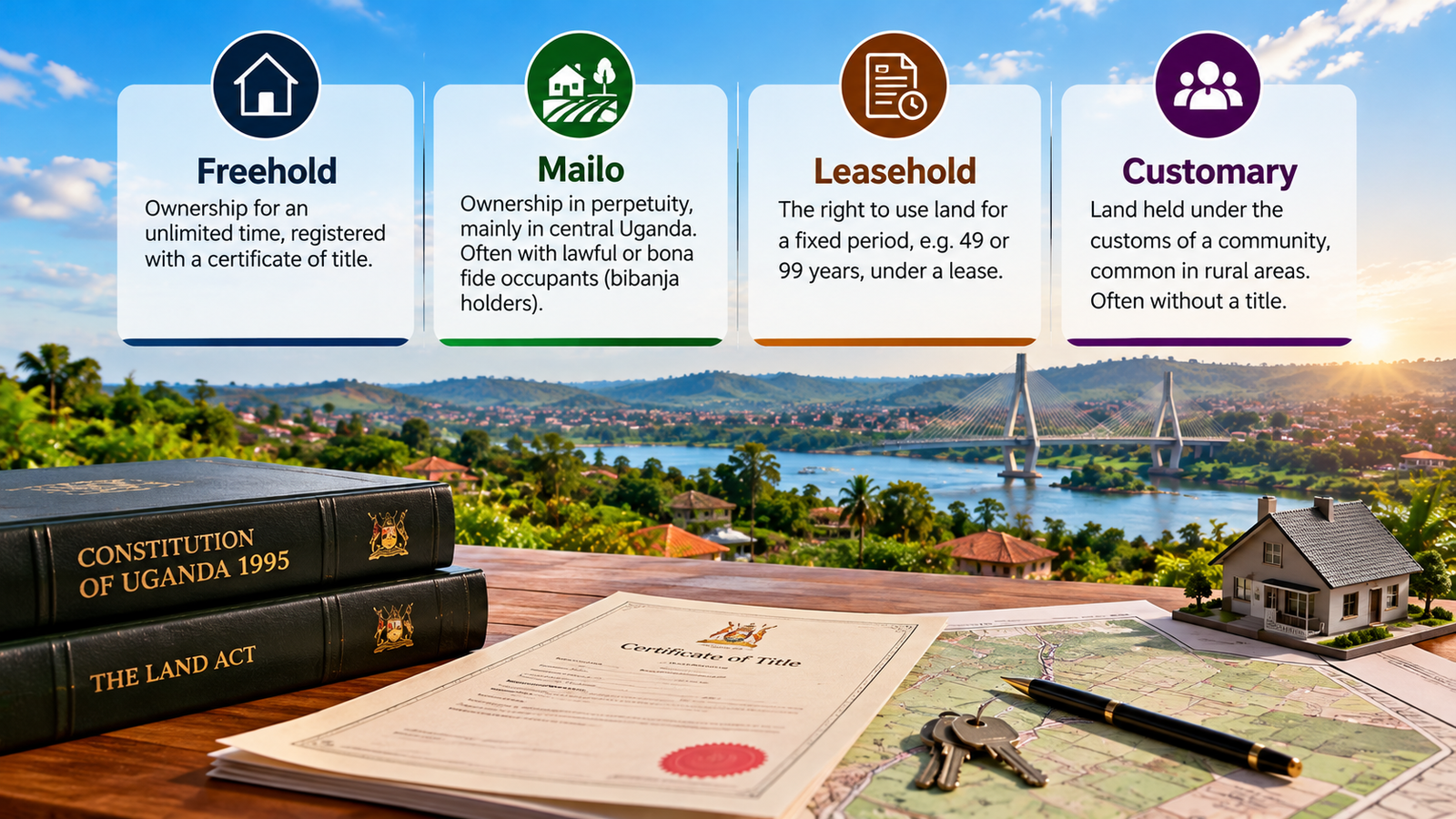
Article 237 of the Constitution of Uganda (1995) and the Land Act recognise four ways of holding land: customary, freehold, mailo and leasehold. The tenure affects what you are buying, for how long, and who else may have rights over the land.
Table of contents [Show]
Ownership for an unlimited time, registered with a certificate of title. It is generally the simplest tenure for buyers, provided the title is genuine and free of encumbrances.
Also ownership in perpetuity, found mainly in central Uganda. Mailo land often has lawful or bona fide occupants (bibanja holders) who are protected by law. Before buying, find out who occupies the land and on what terms.
The right to use land for a fixed period — for example 49 or 99 years — under a lease from a landlord such as a district land board, a city authority or a private owner. Check how many years remain, the ground rent, and any development conditions in the lease.
Land held under the customs of a community, common in rural areas. Much customary land has no title, although owners can apply for a certificate of customary ownership. Buying customary land needs extra care to confirm family and clan consent.
Every listing on our site states the tenure where the owner has provided it. Contact us if you have questions about a particular plot.
This guide is general information, not legal advice.
Choosing a base, organising your arrival and making time for the Source of the Nile.
A consistent checklist for access, utilities and repairs — and how our agent-led viewings work.